

Homeowners Insurance in South Florida: What It Costs and How to Cut It
What South Florida homeowners insurance costs in 2026, what moves the price, and the steps that lower your premium before you buy.
Fit your insurance into the monthly payment you want
What can you pay each month?
/moYou can change this amount
Just the number you're comfortable with — we'll ask a couple more questions next.
See what that buys Illustrative planning tool only. Not a loan offer, appraisal or pre-approval.Short answer
Florida's average homeowners premium in the admitted market was $3,736 a year as of September 2026, and South Florida houses near the coast can cost more. Roof age, wind-mitigation features, construction year and distance to the coast drive the price. Flood needs a separate policy, and insurers must offer hurricane deductibles of $500, 2%, 5% or 10%.
Homeowners insurance in South Florida is measured against a statewide benchmark: Florida's average admitted-market premium was $3,736 a year as of September 2026, according to the state Office of Insurance Regulation. A house in Boca Raton, Delray Beach, Deerfield Beach, Pompano Beach or Parkland can cost more, especially near the coast, and the biggest levers on your price are the roof, wind protection and the home's distance from the water.
Think of your premium as a report card on the house. Insurers grade the roof's age, how it is attached, what covers the windows, when the home was built and how close it sits to the ocean. You cannot change the address, but you can choose a house that scores well and make sure every point it earns shows up on the bill.
Here is what drives the price, what the law makes insurers discount, and how to keep insurance from quietly eating your monthly budget.
What homeowners insurance costs in South Florida
The statewide average is $3,736 a year, but a house near the coast can run well above it. That average covers admitted insurers, including wind, and excludes Citizens and surplus-lines policies.
For planning, our home budget calculator assumes illustrative premiums by home type. Condo and townhome figures cover only your own unit policy. Building coverage for a condo is paid through the association fee.
| Home type | Our calculator assumes | Per month |
|---|---|---|
| House | About $5,400 a year | $450 |
| Townhome | About $2,000 a year | About $167 |
| Condo (unit policy) | About $1,700 a year | About $142 |
| Florida average, admitted market (Sept 2026) | $3,736 a year | About $311 |
The trend is finally friendlier. Florida homeowners rates fell 0.92% in 2025, the only state with a decline, while the national weighted average rose 5.5%, per S&P Global data cited by the OIR. On September 22, 2026, regulators approved cuts of 3.2% to 10.4% for four insurers covering more than 62,000 policies. As of May 2026, twenty new property and casualty insurers had entered Florida since the 2022–2023 reforms. None of this guarantees your quote will fall, but it does mean shopping is worth the effort.
What drives your premium
Roof age and condition, wind-mitigation features, construction year, distance to the coast and building code zone do most of the work. Two houses at the same price can get very different quotes.
- Roof. Florida law bars insurers from refusing to issue or renew a policy solely because a roof is less than 15 years old. Older roofs can still be insured if an inspection shows at least five years of remaining life.
- Wind protection. Impact windows or shutters, roof-deck attachment and roof-to-wall connections all count (more below).
- Age of the home. Older homes often need a 4-point inspection of the major systems before an insurer will write a policy.
- Distance to the coast. A canal-front home near the Hillsboro Inlet, between Pompano Beach and Hillsboro Beach, faces different wind and flood exposure than a house farther inland in Parkland.
- Code zone. Broward County is part of the Florida Building Code's High-Velocity Hurricane Zone, which covers Deerfield Beach, Pompano Beach and Parkland. Palm Beach County, including Boca Raton and Delray Beach, is not in the HVHZ but is still a high wind-speed design zone.
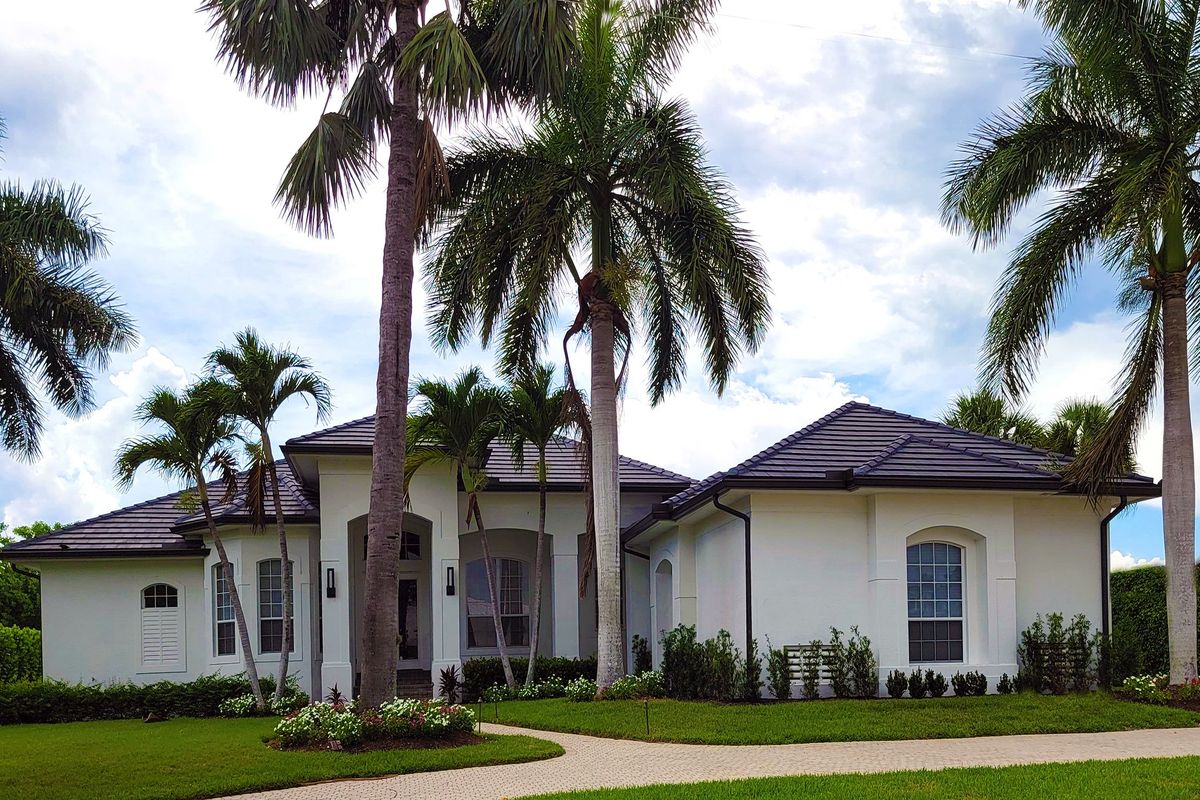
Wind mitigation: the discount the law requires
Florida law requires insurers to offer actuarially reasonable discounts for windstorm-mitigation features, so a wind mitigation inspection can lower your premium. Insurers must also post their mitigation-discount information on their websites.
The statute, F.S. 627.0629, names features such as roof-deck attachment, roof-to-wall connections and opening protection like impact windows and shutters. An inspector documents what the house actually has. Without that documentation, the insurer has no record of features that earn a credit.
Ask the seller for an existing wind mitigation report and a 4-point report if the home is older. If none exists, order the inspections alongside your general home inspection. For homes that need upgrades, the state's My Safe Florida Home program has offered free inspections and grants, but its 2026 application status is uncertain, so check mysafeflhome.com. Our guide to buying a hurricane-ready home in Florida covers which features matter most.
Hurricane deductibles: the number to check first
Your hurricane deductible is often a percentage of the dwelling coverage, not a flat amount. Insurers must offer $500, 2%, 5% and 10% options (with some exceptions by coverage amount), and the deductible applies once per calendar year for all hurricanes with the same insurer.
On $400,000 of dwelling coverage, the choice looks like this:
| Hurricane deductible | You pay before coverage starts |
|---|---|
| $500 | $500 |
| 2% | $8,000 |
| 5% | $20,000 |
| 10% | $40,000 |
A higher deductible lowers the premium, but only choose one you could pay from savings the week after a storm. Keep that amount separate from your down payment and closing cash.
Flood insurance is a separate policy
Most homeowners policies do not cover flood. You need a separate flood policy, through the National Flood Insurance Program or a private insurer, and new NFIP policies generally have a 30-day waiting period.
NFIP residential coverage tops out at $250,000 for the building and $100,000 for contents. Since Risk Rating 2.0, the NFIP prices each home individually, using elevation, distance to water and rebuilding cost rather than mainly the flood zone. An elevation certificate is optional but can lower the cost.
Lenders require flood insurance for federally backed loans in Special Flood Hazard Areas. Even outside those zones, a home near the Intracoastal or a canal is worth a quote. Because of the 30-day wait, buy it well before a storm threatens, not when one is already on the forecast.
Citizens, condos and the insurer of last resort
Citizens Property Insurance Corp. is the state-created insurer of last resort, and it is shrinking as private carriers return. Policies in force fell from 395,337 at the end of 2025 to 293,772 by May 31, 2026.
If a house lands with Citizens, two rules matter. Citizens requires a 4-point inspection for homes more than 20 years old, and it requires roof inspections for shingle roofs over 25 years old or tile, metal or slate roofs over 50 years old. It is also phasing in mandatory flood coverage: dwellings valued at $400,000 or more since January 1, 2026, and all remaining policyholders from January 1, 2027 (confirm the current rule with Citizens).
Condo buyers carry a unit policy, often called HO-6, for interiors, belongings and liability, while the master policy covers the building and is paid through the association fee. The wind-only market for condos has improved too: writers in Broward, Miami-Dade and Palm Beach grew from one to five. Our comparison of a condo, townhome or house shows how these costs stack up by type.
How to lower your insurance cost before you buy
The best time to lower your premium is before you sign, while you can still walk away. Get real quotes during the inspection period, not after it ends.
- Ask the seller for the roof age, permits, and any wind mitigation and 4-point reports.
- Get at least two or three quotes within the first days of your inspection period.
- Order a wind mitigation inspection if no recent report exists.
- Compare hurricane deductibles side by side, and price the 2% option, not only the cheapest premium.
- Get a flood quote, even outside a high-risk zone.
- For condos, read the master policy summary and ask what the association fee covers.
- Add the premium to your monthly budget before you make an offer, not after.
Insurance is one of the few housing costs you can shop every year. Put a realistic number into your budget now, and treat any discount you win later as a bonus.
This guide is general information, not legal, tax or lending advice. Check current figures with your lender, insurer or the county property appraiser.
Questions buyers ask
When should I get insurance quotes when buying a house in Florida?
During your inspection period, ideally in the first few days. If a roof or 4-point issue makes the home hard to insure, you can still renegotiate or walk away. Waiting until after the inspection period ends removes that option.
Does homeowners insurance cover hurricane flooding in Florida?
Usually not. Wind damage is covered by the homeowners policy, subject to the hurricane deductible, but flood needs a separate NFIP or private policy. New NFIP policies generally have a 30-day waiting period.
Should I insure a South Florida home with Citizens?
Citizens Property Insurance Corp. is the state-created insurer of last resort, so compare private quotes first; its policy count fell from 395,337 at the end of 2025 to 293,772 by May 31, 2026 as policies moved to private carriers. If you do land with Citizens, it requires a 4-point inspection for homes more than 20 years old and is phasing in mandatory flood coverage, with all remaining policyholders covered from January 1, 2027.
What does a condo owner's insurance policy cover?
A condo unit policy, often called HO-6, typically covers your interior, belongings and liability. The association's master policy covers the building and is paid through your fee. See how this compares by home type in our condo, townhome or house guide.
Sources
- Florida Realtors — Florida approves more home insurance rate cuts
- Florida OIR — New property and casualty insurers entering the market
- Florida Statutes — Section 627.0629 (wind mitigation discounts)
- Florida Statutes — Section 627.701 (hurricane deductibles)
- Citizens Property Insurance — Inspections
- FEMA — Flood insurance an important resource for Floridians


